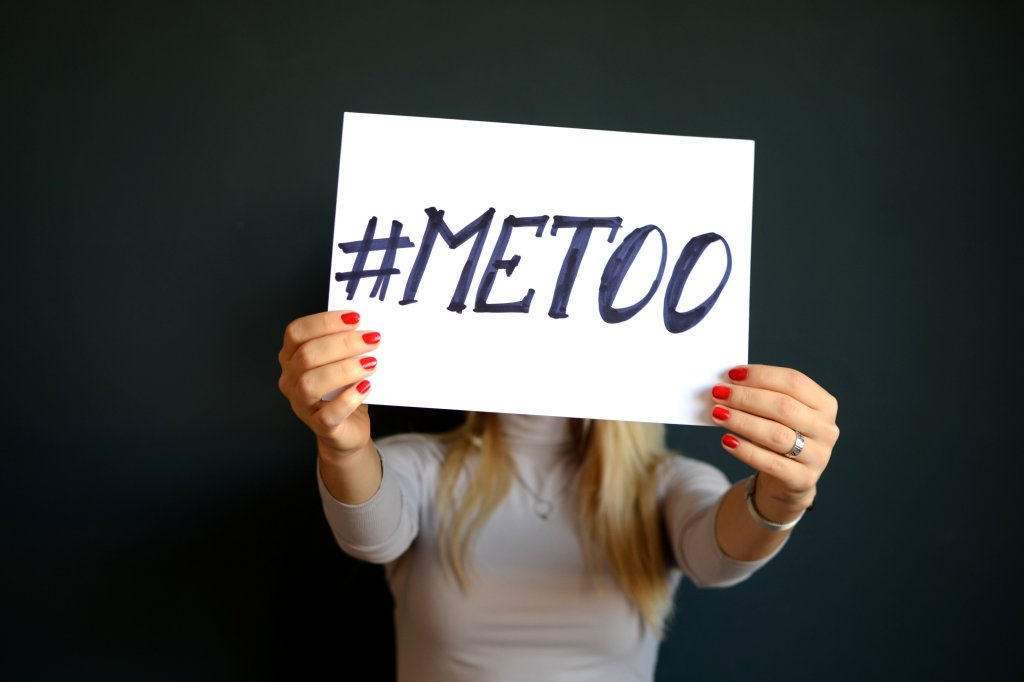
The #MeToo movement took center stage in North American culture in 2017 with a contagious desire to change things and take down powerful men. Since then, it has changed the way people think about sex crimes and particularly rape, but not for the better. During 2020, the high-profile influence of the movement collapsed when two of its most prominent backers, Rose McGowan and Alyssa Milano, fell out with one another. Milano backed Biden who had his own accuser (Tara Reade), which McGowan could not abide. What lessons can be learned from the mistakes of this movement? Western justice is based on the idea that it is “better to let ten guilty men go free than one innocent man go to prison.” It is full of checks and balances that undoubtedly let the guilty go free, but they are justified because they protect the innocent. #MeToo sometimes seems to have inverted this principle so that it is better for ten innocent men go to prison than one guilty man to go free. Based on this idea, here are a couple of points that I believe requires a rethink.
“Believe all Women”
Despite some pretensions to the contrary, “believe all women” or “believe women” did seem to mean that women who came forward with sexual assault accusations should automatically be believed by society in general and should generate swift social retribution against the accused. (Most of the push back against the movement has been focused on this issue, but there are others worth discussing.) This is not to say that accusers who come forward with such accusations should be ignored by journalists or especially by the police, but that society should withhold social sanction until the courts have reached a verdict. This rule cannot always be followed in the case of sub-criminal behaviour (where there will be no court case), but that in this case, there should be some type of investigation before social sanction ensues. By “social sanction”, I don’t mean pressure placed on an organization to investigate, but rather to demand consequences and to enact such consequences before an investigation has taken place. This all boils down to the same principle: do not punish people by taking accusations as definitive proof on their own, without some type of attempt to fairly determine the truth, and without giving the accused party a chance to defend themselves. To treat accusations as definitive proof on their own is no more than a primitive mob justice. Unfortunately, apart from social sanction, this way of thinking may have also influenced the courts and how they handle rape testimony, making it much easier to reach guilty verdicts (and not in a good way).
Delayed Reporting
We are to believe that accusations are still perfectly reliable even many years after the fact. Society and even courts have softened on such reports. Memory is unreliable enough as it is, but the idea that such delayed reports are not less reliable is ridiculous.
Power Imbalances
Men are normally attracted to women who are less powerful and less successful than them, and women are normally most attracted to men who are more powerful than they are. There is also always a physical power imbalance between men and women, apart from the social one that is often there. Laws and principles that decree the unacceptability of power imbalances are basically criminalizing heterosexuality.Even if rules like this are trying to capture something legitimate, their vagueness makes it easy to target any powerful man who is unpopular of unlikeable. Perhaps this rule is trying to capture conduct that is sexually exploitative, but in a society that accepts sexual promiscuity, it is hard to distinguish normal sexual behaviour from exploitative sexual behaviour, because men will still be promiscuous in a way that targets younger and less powerful women. This rule then unfairly penalizes men for sexual promiscuity and not women.
Retraumatizing victims
In the movement, there has sometimes been the preposterous idea that thoroughly cross-examining a rape victim will “retraumatize” them. Not only does this amount to the same thing as taking accusations as evidence enough of a crime, it is also an abuse of the concept of trauma. #MeToo feminism seems to take delight in making men as vulnerable as possible to any allegation and therefore emboldening false accusers. Even if a thorough cross-examination really hurts victims, it is still right because someone’s life is on the line.
Activist Convictions
Particularly when conjoined with a jury system, a high degree of social pressure will result in convictions regardless of guilt. This is not to rule out activist influence in law enforcement as they may have important insights especially when law enforcement may not be doing its job. This social pressure may be unavoidable in high profile cases, but these cases deserve extra scrutiny after the conviction.
 Andries Louis Joubert
Leave a comment